Description
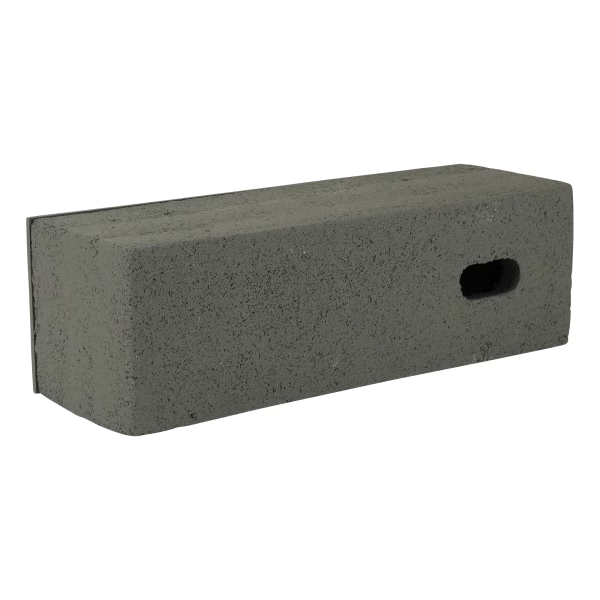
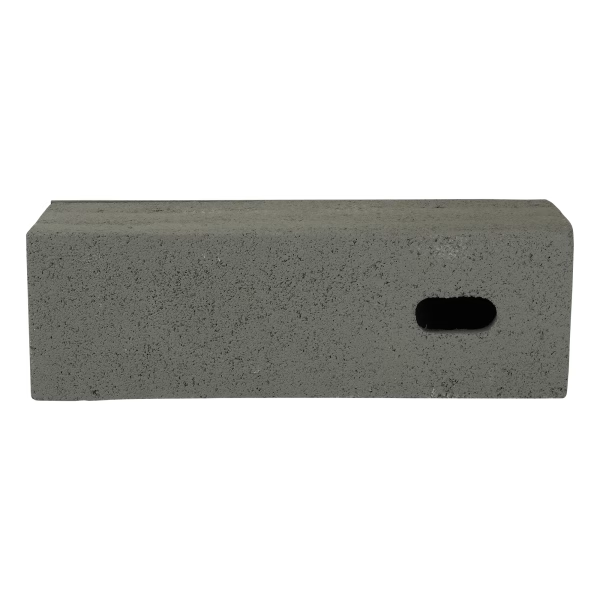
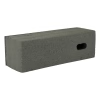
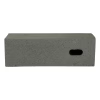
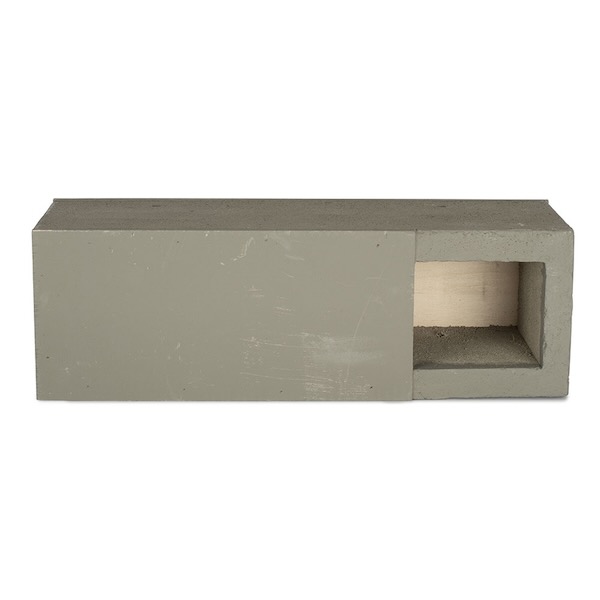
Our Swift built-in nest box is specifically designed to match British brick size standards, making it an ideal ‘fit & forget’ solution for integration into both new builds and renovation projects. Perfectly suited to those hard-to-reach locations that swifts naturally favour—such as under the eaves—this nest box blends effortlessly into masonry walls. Like all products in our WoodStone® range, it provides excellent insulation against temperature extremes and offers reliable protection against predators.
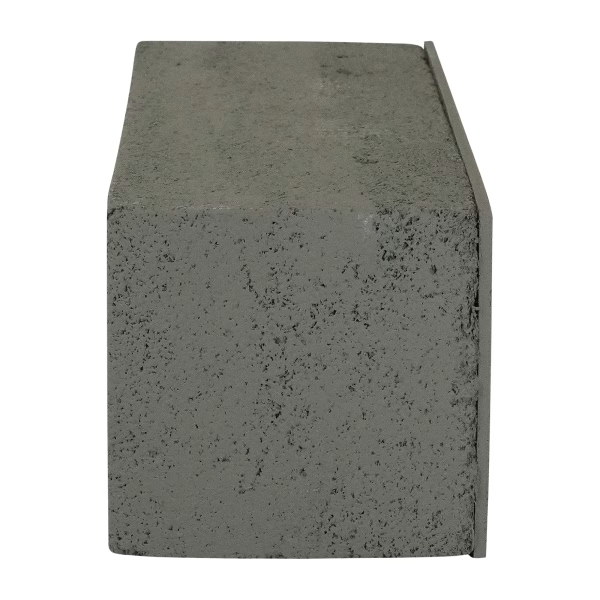
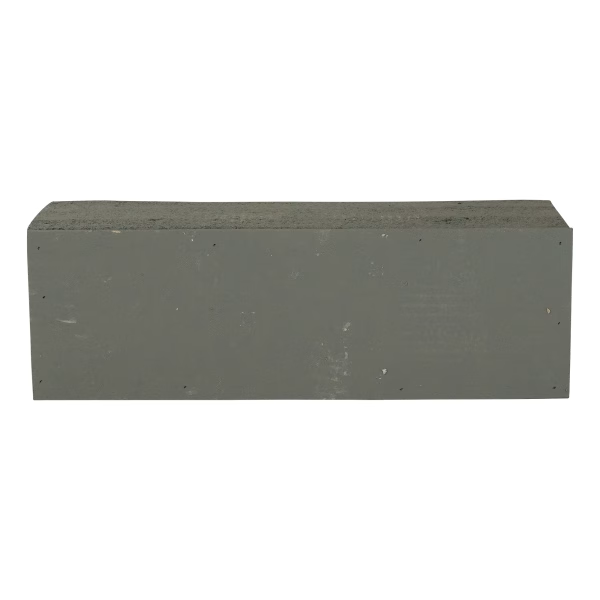
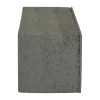
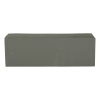
The Swift built-in nest box is engineered for seamless incorporation into the outer wall of a building. It protrudes approximately 50mm into the cavity, allowing space for insulation behind the unit when installed against a heated internal space. Inside, the box is divided into two nesting compartments, and the entrance hole can be oriented to either the left or right based on your preference.Insulation can easily continue behind the nest box, preventing the formation of a thermal bridge. Should you need to adjust the insulation, simply cut around the nest box’s outline to maintain performance.Thanks to its flat WoodStone® front, the box is also compatible with rendered walls. We recommend using a former during construction to preserve the integrity and size of the entrance hole.
For optimal placement, install the Swift built-in nest box on the north or east-facing gable end of a building, roughly three courses below the roof apex. This height typically ensures minimal disturbance and suits the natural flight paths of swifts. Maintain a clear area in front of the nest box—free from trees or shrubs—to provide unobstructed access.
As swifts prefer to nest in colonies, we advise installing multiple boxes with at least 40cm spacing between them. No nesting material is required. As a general guideline, one Swift built-in nest box per dwelling is recommended. For example, a development of 30 homes should ideally include 30 built-in boxes.
This integrated nest box does not require cleaning. Swifts themselves will remove excess nesting material (for example, if a house sparrow has been in the nest box).