Description
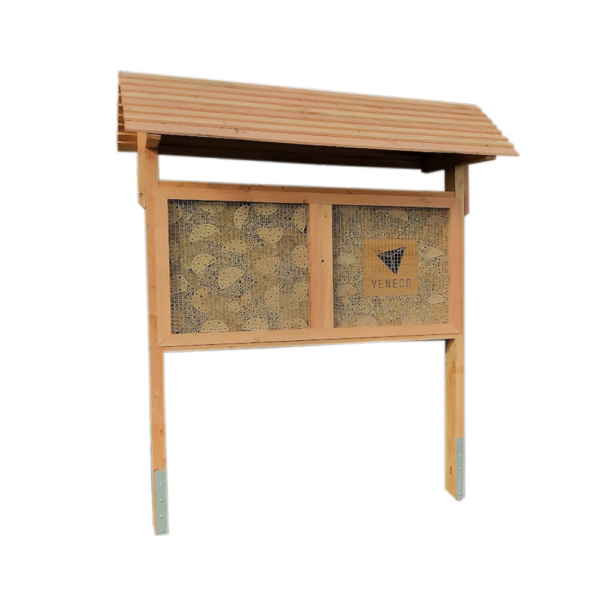
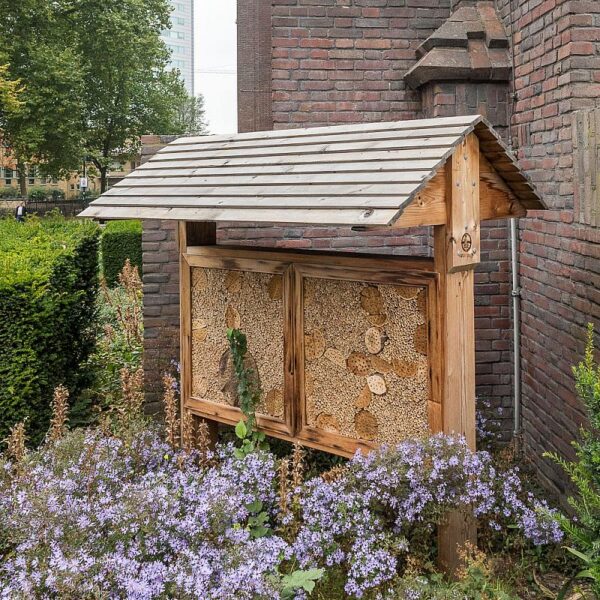
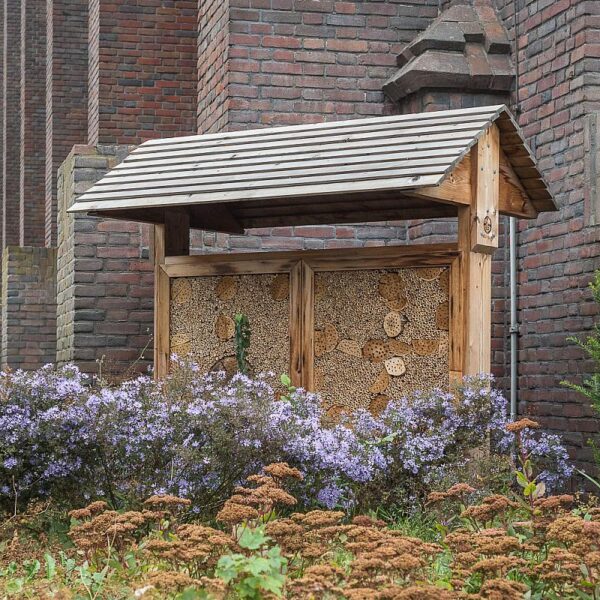
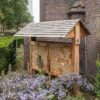
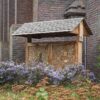
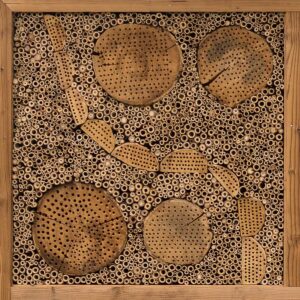
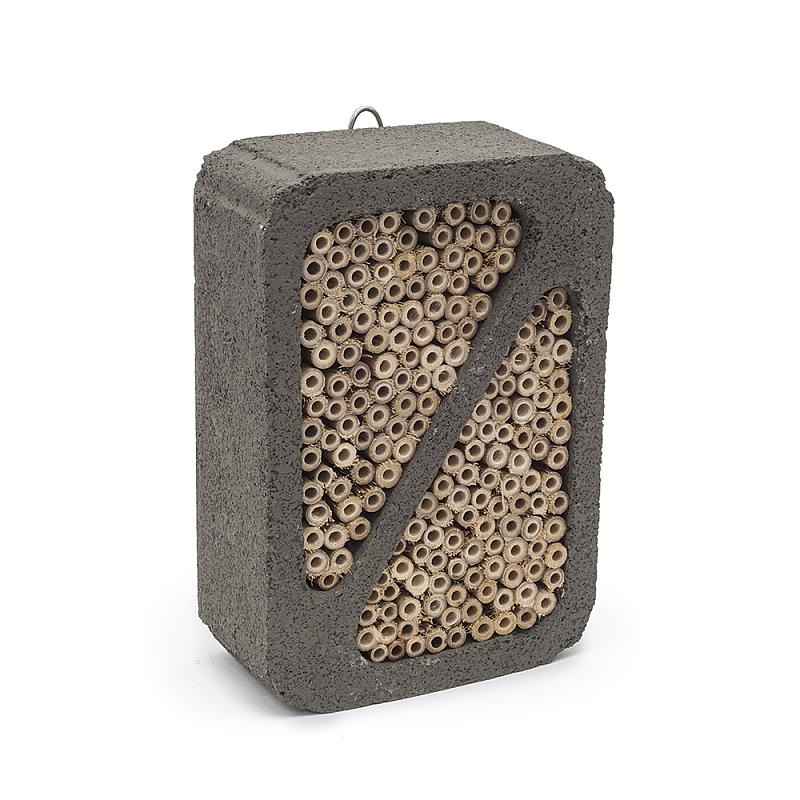
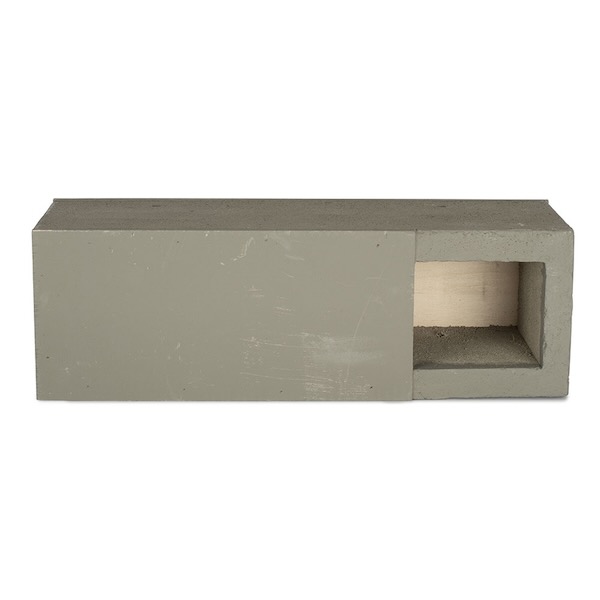
A number of species of solitary bees and wasps use this wall as a nesting aid. The two filled tanks are primarily filled with bamboo tubes and reeds, with internal diameters between 2 and 10 mm where possible. This allows several species to lay their eggs inside. The bamboo mix also includes larger diameter tubes or tubes that are not fully open or even closed. This is not a problem, as enough suitable tubes remain. The wall is constructed with a Douglas wood frame and roof, along with metal post holders for stable installation in the ground. Bamboo-filled bins are slid into the wall. If desired, netting can be stretched in front of the trays to prevent birds such as tits from eating the larvae.
The insect wall comes as a 3-part kit: the frame, the roof and the filled trays. Installation can be supported by our team.
- Place the insect wall preferably in a sunny, flower-rich spot with some shade. The front should face south, where possible.
- Before installation, attach the supplied metal post holders to the frame.
- Dig two holes for the post holders, using the provided ground level holders to ensure the frame is not placed too deep.
- With two people, position the frame upright and level in the holes, then fill the holes with soil and quick-setting concrete.
- Ensure it remains upright using the included bracing posts and slats. Once stable, the trays can be slid into the frame and secured.
- The transition edges between the frame and trays can be trimmed with the supplied slats. Cut the slats to the correct length as needed.
- Finally, place the roof on the wall and secure it with the help of two people.
Douglas fir does not need to be treated, but regular painting will extend its durability. The bamboo tubes do not need to be replaced unless they are damaged or pulled out. The trays can also be replaced entirely with the refill IP VU 01.