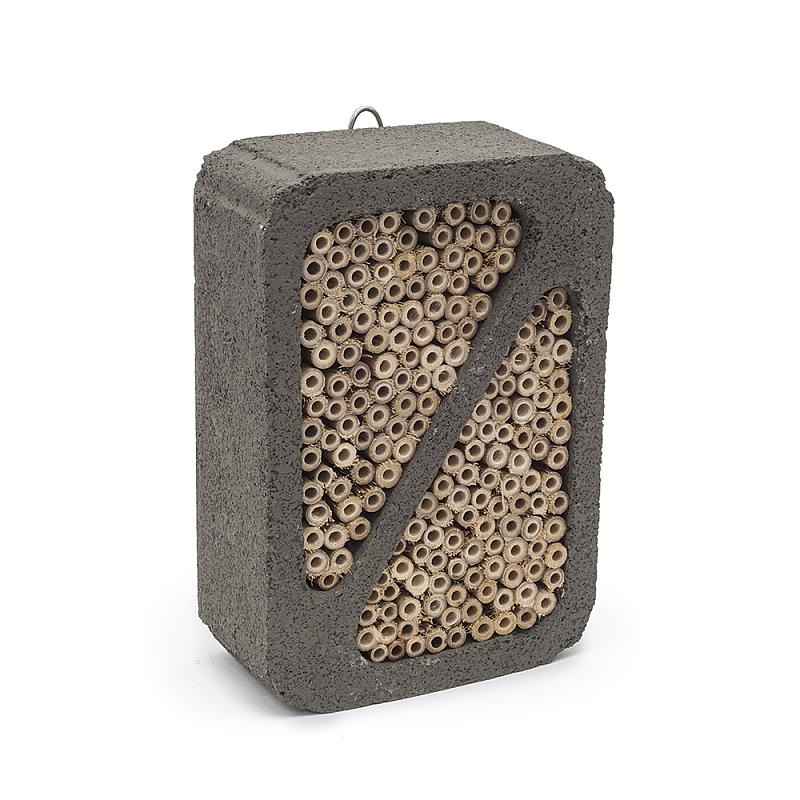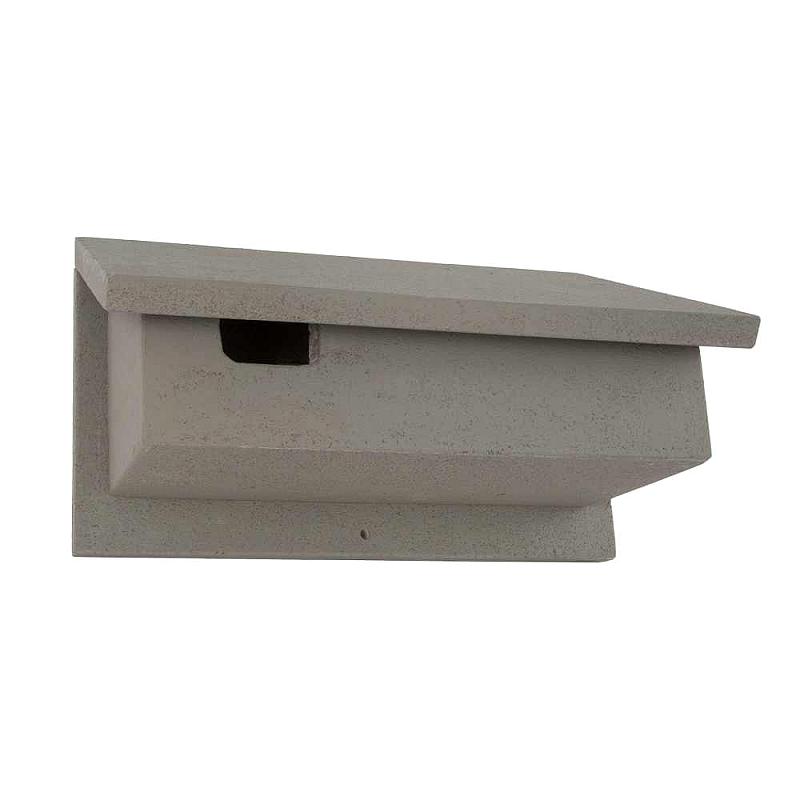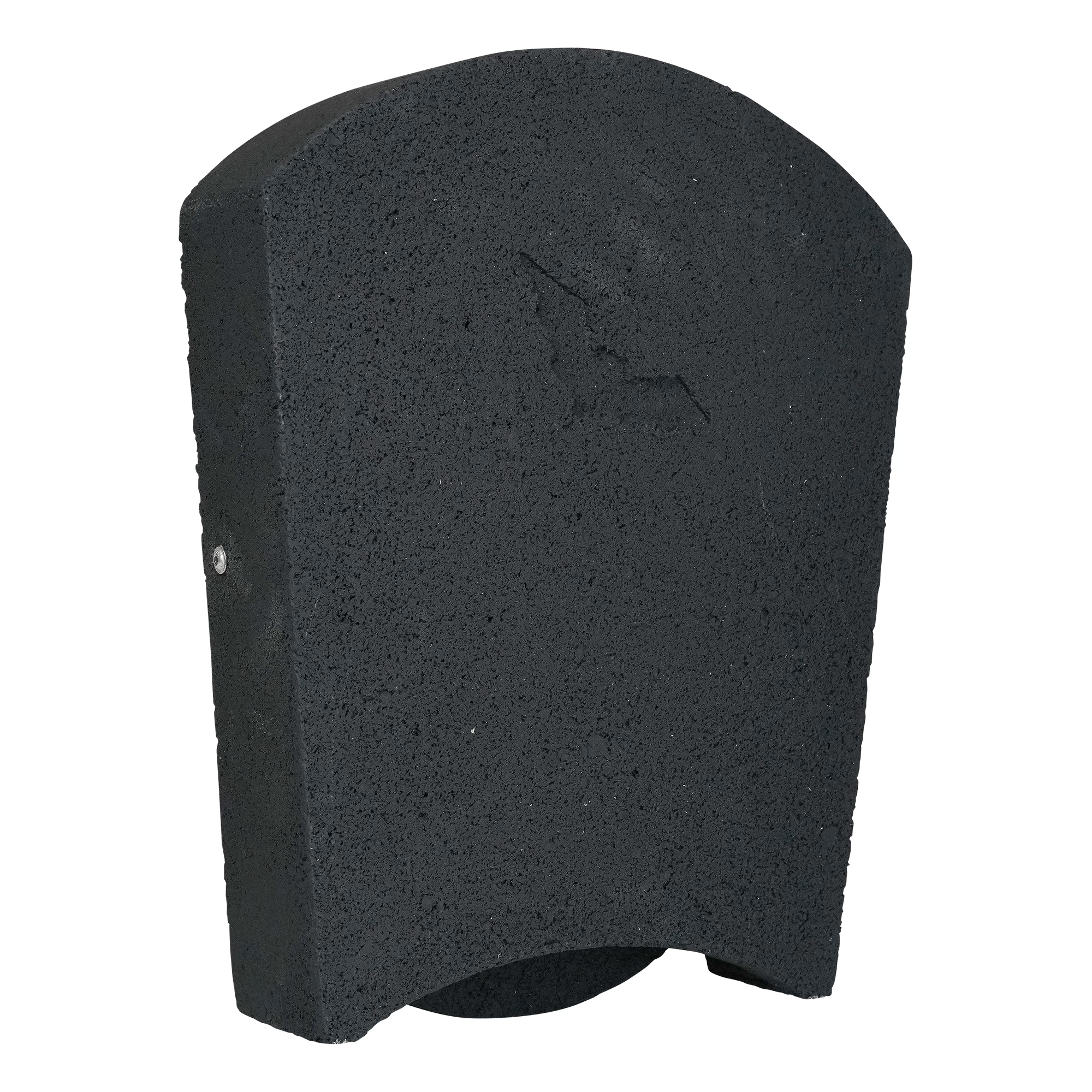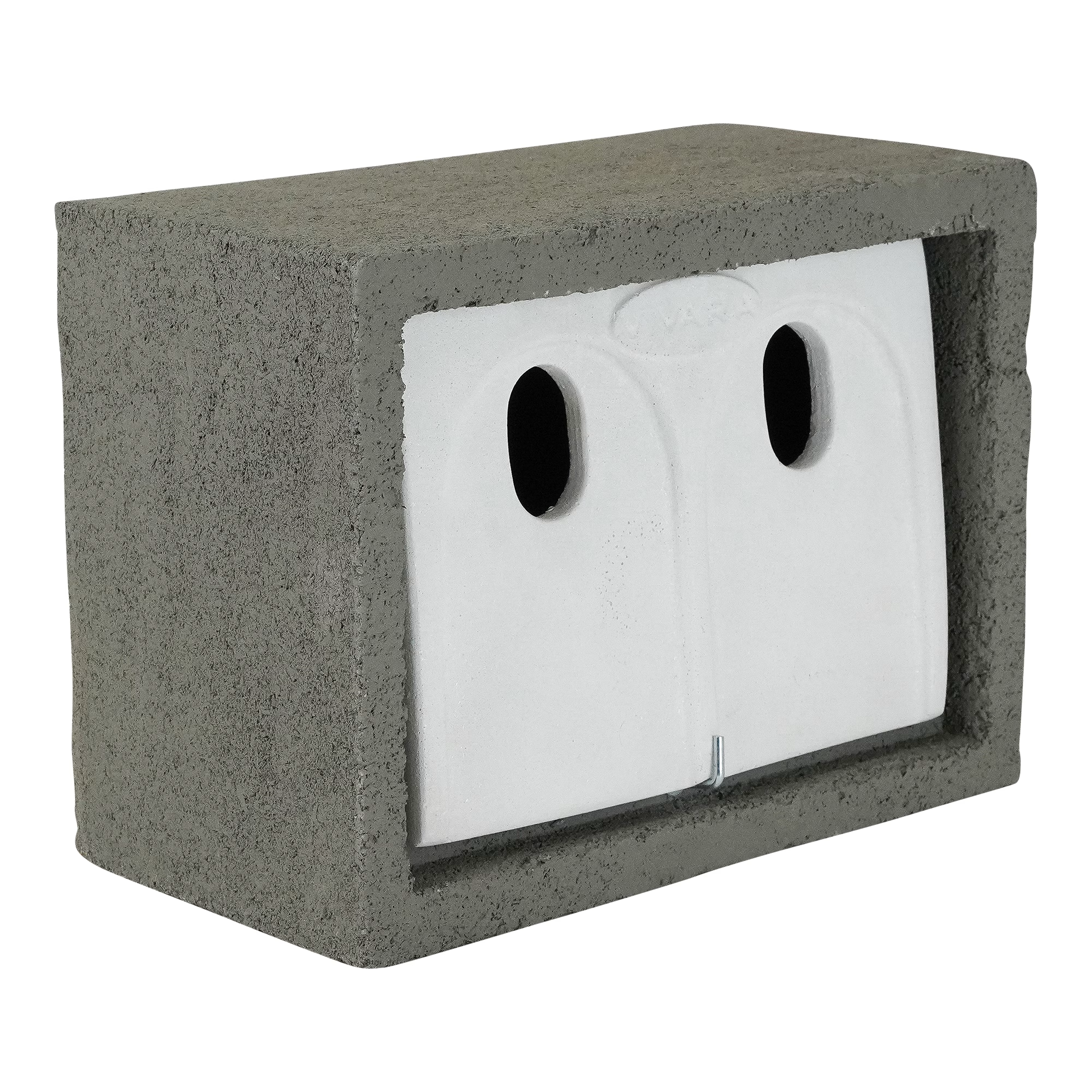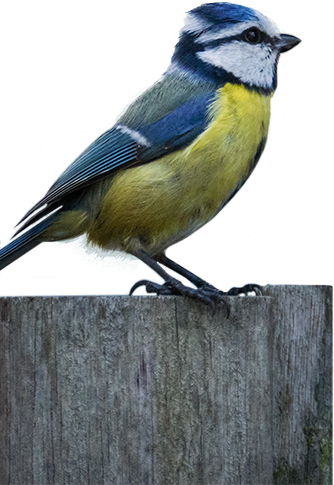



Kingfishers dig nest holes in steep banks, typically right along the water’s edge. This nest box is designed to create an artificial nesting space in locations where conditions for a natural nest are not ideal. The nest box is completely buried within a homemade steep wall.
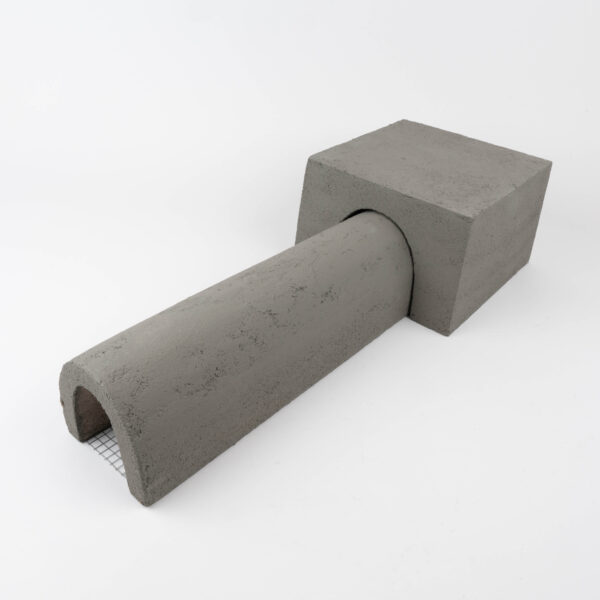


NK IJ 01 Kingfisher nest box
Wood Concrete✔️ Vogelbescherming Nederland


Item number:900720119
Material:
This WoodStone® nest box is designed to create an artificial nesting space in locations where conditions for a natural nest are not ideal. WoodStone® is a mix of 100% FSC®-certified wood fibres and concrete.
- Place the nest box along the bank of a puddle, pond, or stream. The entire nest box must be buried in the bank.
- Ensure the entrance opening is flush with the bank. The tunnel of the nest box should slope slightly downward from the nest area to prevent water from entering the nest corridor.
- Before applying, place a layer of dry soil in the nest area and create a small nest pit to hold the eggs together. Also, fill the tunnel bottom with sand and/or clay. The kingfisher will dig the tunnel itself.
- Install a perch for the birds near the nest entrance. This could be a horizontal branch (or several) inserted into the wall or stakes near the entrance in the water. The kingfisher uses the perch for fishing and as a lookout for predators.
- It is beneficial to place two nests close together (at least 2 meters apart). This allows the female to create a second nest in the empty box while the male cares for the young from the first brood.
In most cases, the nesting area will no longer be accessible for maintenance. However, it is important to regularly remove any vegetation around the nest entrance.
- Item number: 900720119
- Weight (kg):9,3
- Weight (kg):
- Colour:Gris
- Species group:Oiseaux près de l’eau
- Species:Martin-pêcheur

LOOKING FOR EXPERT ADVICE?
Please contact us. Our experienced consultants are here to help you








 Production in our own European factories
Eco-friendly products developed with nature organizations
In-house ecologists and environmental consultants
FSC®-certified
Sustainable and Tested Products & Hardware
Production in our own European factories
Eco-friendly products developed with nature organizations
In-house ecologists and environmental consultants
FSC®-certified
Sustainable and Tested Products & Hardware